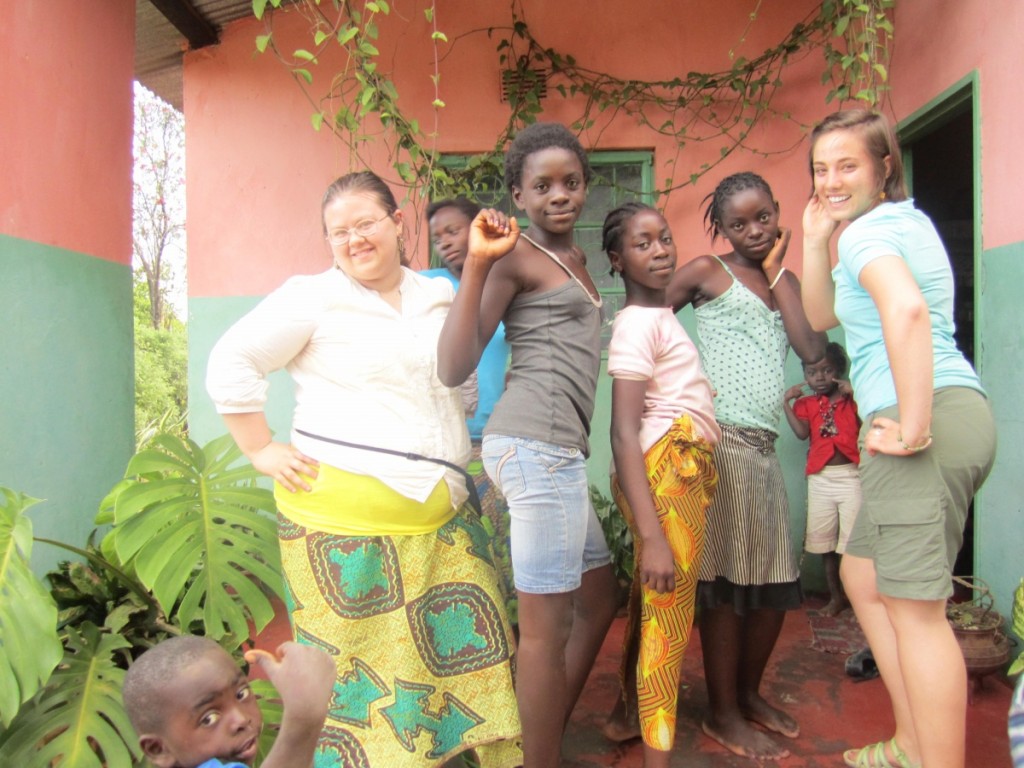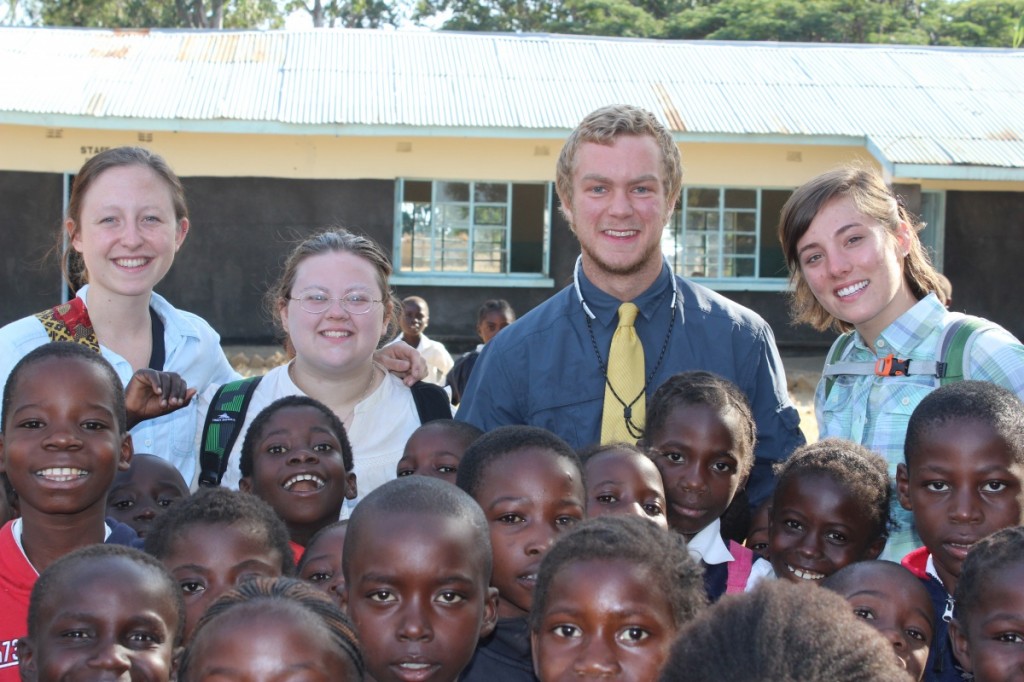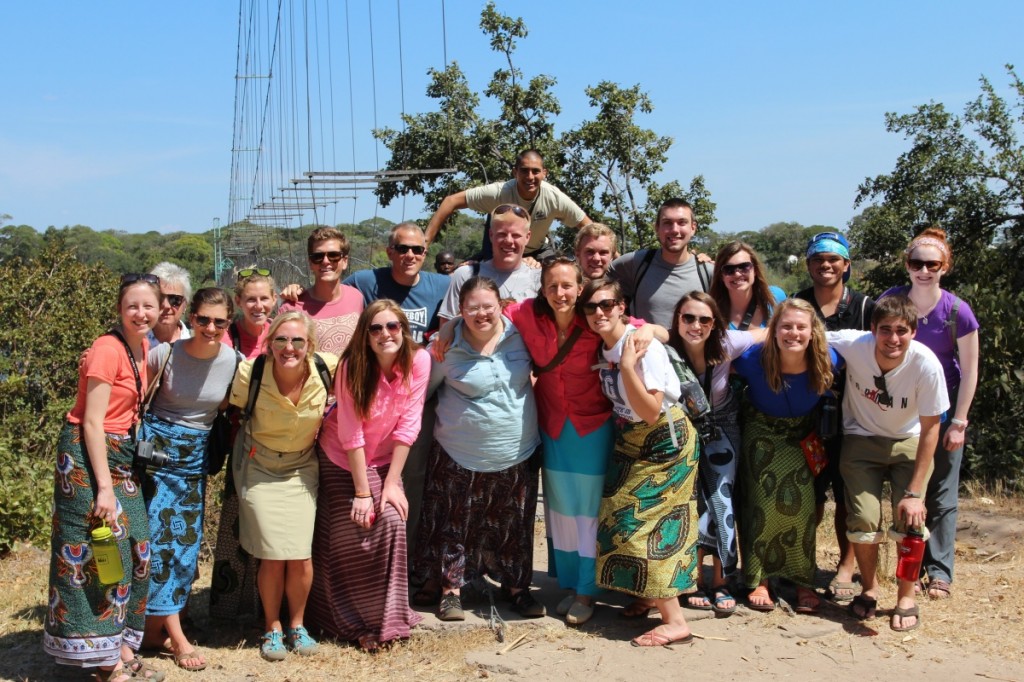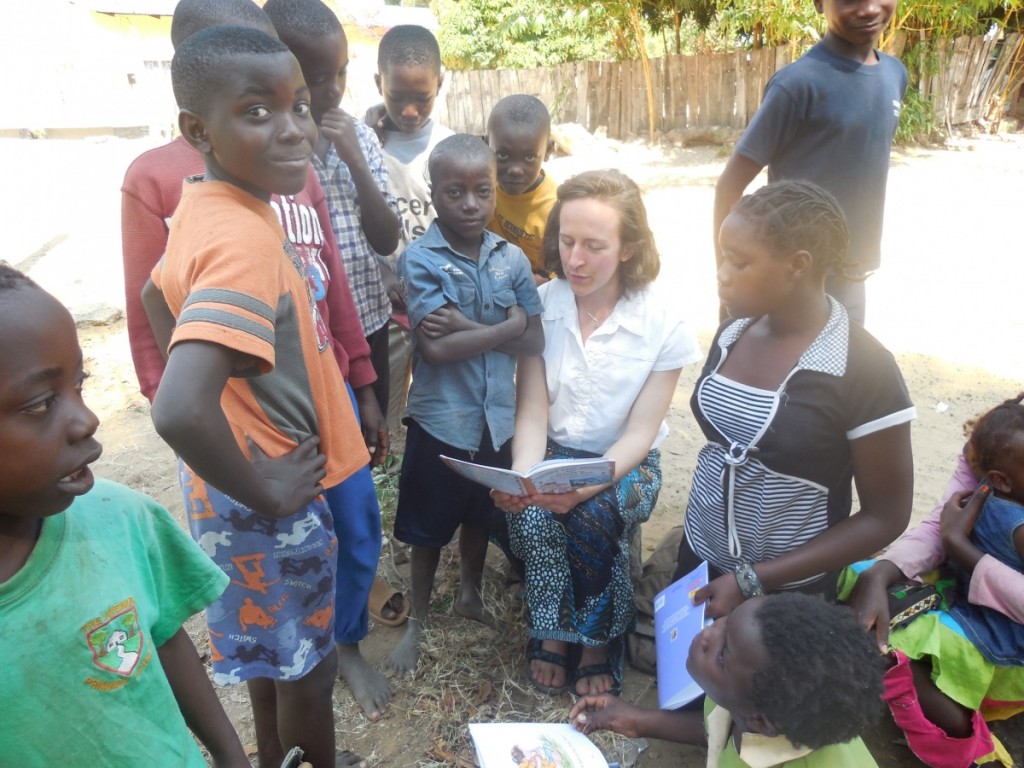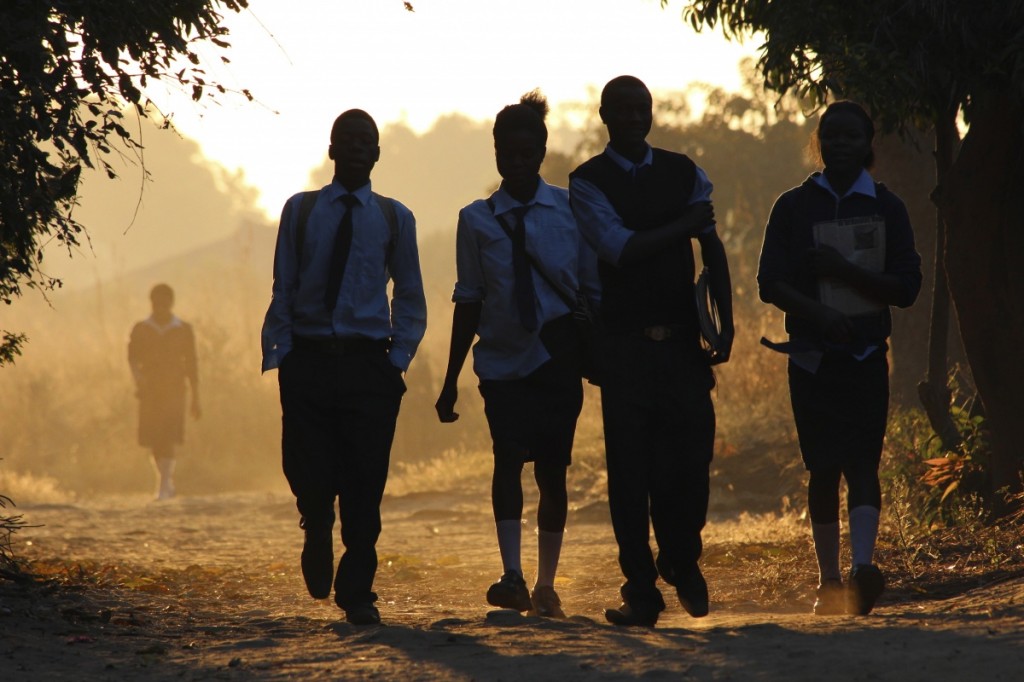
Wow! We have already been in Zambezi for one full week – a week that, as my fellow bloggers have so articulately described, has been packed with challenging and eye-opening new experiences, moments of speechlessness at the beauty that surrounds us, and the nurturing of new seeds of friendship. This morning, as I ran along the Zambezi River, I was struck again by the surreal “Lion King like” beauty of the grasslands stretching indefinitely beneath the rising sun. As I ran, I was followed by the chorus of “How are you?” “How are you?” “How are you?” that we have all become so accustomed to hearing every time we step outside. We have found ourselves adopting this script (sometimes even subconsciously imitating the Zambian accent) – greeting everyone we pass with “How are you? Fine. How are you?” In fact, in my very first hour in Zambezi, little Wendy who greeted me at the plane taught me how to say, “How are you? Fine” in Luvale: “Muno yoyo mwane? Kunawa.” It has become a mindless exchange, a five word greeting that follows us everywhere we go. And yet, as this phrase echoed in my mind along my run this morning, I began to ask myself – How ARE the people of Zambezi really? Beneath the script that dictates they are fine, how are they really feeling?
Coming to Zambia, I hoped the answer to this question would be happy. I wanted to believe that, as I had heard several times growing up, the poorest people in the world are the happiest. Stepping off the plane, I did see happiness. I saw hundreds of smiling children, children whose smiles outshone the evidence of poverty that covered them – tattered clothes and dirt covered bare feet. I immediately saw in the children the happiness I wanted to see in Zambia. And yet, since that first day, I have discovered that many Zambians do not share in this happiness. Although my heart continues to beg me to believe otherwise, I cannot deny that many people here are plainly unhappy.
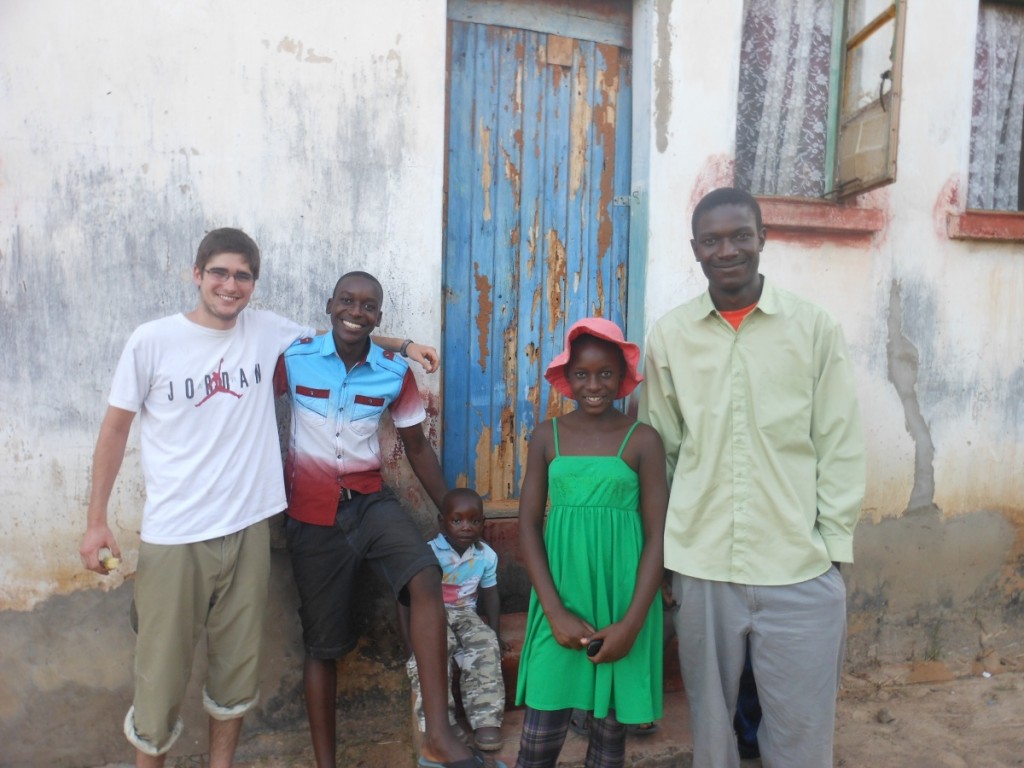
During my homestay, I experienced firsthand life with a Zambezi family. It was not the poverty itself – the absence of running water or the realization that the entire house was smaller than my living room – that disturbed me and pulled at my heart. It was the conversation I had with twenty-one year old Moses, a young man my age. Moses told me that he and most Africans dream of moving to America and never coming back. In America, Moses said, people are not bored because they have “stuff.” In America, people are happy, and, in Africa, they are not. I wanted Moses to understand that the image of America he sees in professional sports and on television is not representative of the real America. People in America live in poverty too, and, people in America, the rich and the poor, are unhappy, too. I found myself speechless. I didn’t want to belittle his own poverty, incomparable to that back home, but I didn’t want to accept the explicit declaration that one could not be happy in Zambia.
As a part of the health education group, I had the incredible opportunity to follow home based care volunteers as they visited patients around the “Bush” or rural villages surrounding Zambezi. We met our first patient sitting on the sand outside of a small shack. Having estimated her age to be about eighty, I was struck to discover that she was only in her forties. Words simply cannot describe the experience. Every last bit of her energy seemed to be drained by the beating African sun overhead. In this woman, I saw not only the effects of the physical deterioration caused by AIDS, but also the effects of emotional deterioration. The woman’s face held an expression of absolute misery and suffering. When asked explicitly what makes her happy, she replied curtly, “Nothing. I am not happy because I am suffering so badly.” Again, I had encountered the reality of unhappiness in Africa. On the face of this slowly deteriorating woman, abandoned by her children and struggling through every day, I saw utter hopelessness unlike I have seen before.
While in Zambezi, I have seen undeniable unhappiness and hopelessness in the voices of Moses and the patients I visited. However, I have also seen hope. Amid great darkness, the light of a single star seems brighter. Similarly, in the most dark and hopeless situations, small flashes of hope shine brightly. Amid the hopelessness of the patients I visited Monday, the home based care workers themselves shone as beacons of hope. Thirty volunteer women without medical training walk miles day after day simply to check in on patients. The patients have already received medical treatment from the hospital, and it is the role of these women solely to check in on how the patient is doing and above all to offer a loving hand. Although I have only spent a brief morning with these inspiring women thus far, I believe they have shaped me already, by elucidating the importance of love in the career I hope to pursue as a doctor and in our time here in Zambezi.
These women cannot bring the physical healing that their patients so desperately need to strengthen their bodies. Yet, they bring all that they can and that is love. Healthcare I believe is only 25% medical care and 75% love. Love delivers hope even amid the most hopeless diagnosis, when a physical cure is impossible. These women shared love by travelling miles simply to sit on the same level as their patients and help them to see the unconditional dignity of their lives. As members of the health group, we thought that we would teach the home based care workers about health. However, they ended up teaching us about love, an equally or perhaps even more important component of healthcare.
The importance of love stretches beyond the healthcare setting and can help explain the work our entire group is doing in Zambezi. The “disease” we are all combatting is poverty, which we have seen results in the same state of hopelessness as does a medical disease. Like the home based care workers, we do not have an easy cure for the suffering we see. Money we throw at the community, clothes we leave behind, or even the classes we teach are not going to cure poverty. Although we cannot provide the hope of a cure, we can always provide the hope of love. When we doubt ourselves, we must trust in the power of love. I could not tell my new friend Moses how to cure Africa’s economic problems or how to find happiness, but I can continue to show him love through friendship. I trust that this love will eventually bring a form of happiness and hope greater than that brought on by physical possessions. In America and in Zambia alike people are unhappy for various reasons. It is our duty to all slow down, care enough to actually stop and find out if a friend is actually doing “fine,” and then share a little bit of love. According to a traditional Zambian proverb, “one who possesses wisdom has it in the heart, not on the lips.” Over the next three weeks, we must all devote ourselves to sharing the love in our hearts with the people in Zambezi. This is something we CAN all do.
Michelle Brajcich
Class of 2014